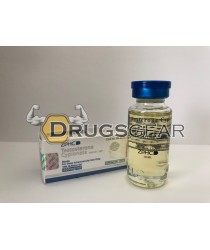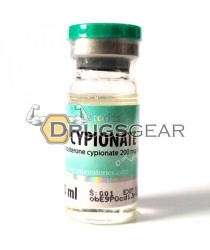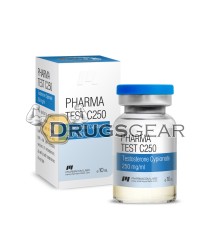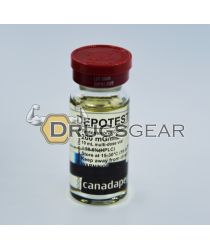
BUY TESTOSTERONE CYPIONATE FOR CONSISTENT RESULTS
WHAT IS TESTOSTERONE CYPIONATE AND WHY PEOPLE BUY IT
Testosterone Cypionate is a long-acting injectable testosterone ester known for its slow and predictable release profile. Its stability over time makes it suitable for structured, long-term planning contexts. For athletes, this consistency makes planning easier and progress more measurable across longer training phases.
Because of its predictable profile, Testosterone Cypionate is often used as a foundational compound. It fits long training blocks where control, routine, and long-term progression matter most.
HOW TESTOSTERONE CYPIONATE WORKS AND WHAT IT IS USED FOR
Testosterone Cypionate delivers testosterone into the bloodstream gradually after injection. The cypionate ester slows absorption, which helps reduce sharp peaks and supports a more consistent hormonal profile over time.
Key functional characteristics:
- gradual absorption after injection
- extended active duration
- more predictable testosterone levels
well-suited for structured injection schedules
WHY TESTOSTERONE CYPIONATE IS A POPULAR CHOICE TO BUY
Testosterone Cypionate is often chosen as a base compound for athletes who prioritize routine, long training blocks, and predictable progress.
Common performance-oriented use cases:
- base compound in structured cycles
- support for longer training phases with consistent workload
- maintaining strength and muscle during extended blocks
- protocols with clear start, tracking, and exit planning
TESTOSTERONE CYPIONATE VS ENANTHATE WHICH ONE IS BETTER TO BUY
Testosterone Cypionate and Testosterone Enanthate are very similar long-acting esters. In real-world use, results are usually comparable when dosing and scheduling are consistent.Key comparison points:
- pharmacological differences are minor in practice
- outcomes depend more on consistency than ester choice
- availability and regional preference often drive selection
Practical takeaway: choose the ester you can source reliably and run consistently.
TESTOSTERONE CYPIONATE SAFETY WHAT BUYERS SHOULD KNOW
Safe use of Testosterone Cypionate depends more on planning and execution than on the compound itself. Most issues arise from poor structure, inconsistent use, or lack of recovery planning.
TESTOSTERONE CYPIONATE SAFETY FOR ATHLETIC USE
- FOLLOW A CLEAR USE STRUCTURE Defined timelines reduce risk and improve consistency.
- DO NOT CHASE RESULTS WITH HIGHER DOSES Better structure beats higher dosage.
- MANAGE RECOVERY AS PART OF PERFORMANCE Fatigue control directly impacts progress.
- FOCUS ON LONG-TERM STABILITY Sustainable results come from consistency, not spikes.
TESTOSTERONE CYPIONATE HISTORY AND REAL-WORLD USE
Testosterone Cypionate was developed in the United States as a long-acting injectable ester designed for stable testosterone delivery. Its predictable release made it practical for extended use rather than short-term applications.
Beyond sports, Testosterone Cypionate was also explored in controlled military and veterinary contexts. It was studied for maintaining muscle mass and physical resilience during prolonged stress, recovery, or inactivity, including use in animal health for hormonal support and rehabilitation.
Over time, its association with performance training increased, particularly during long training phases focused on gradual strength and muscle development. As anti-doping policies expanded and detection methods improved, regulatory control over testosterone use intensified, leading to strict restrictions in competitive sports.
Today, Testosterone Cypionate is valued primarily for consistency, control, and suitability for long-term, structured planning under clearly defined rules.
ESSENTIAL BLOOD WORK DURING TESTOSTERONE CYPIONATE USE
Blood work is used to track overall balance and long-term trends rather than to react to isolated values. Its primary role is to confirm that the chosen structure remains manageable and sustainable over time.
Key markers commonly monitored:
- total and free testosterone
- estradiol (E2)
- hematocrit and hemoglobin
- lipid profile
These markers provide a general picture of hormonal balance and systemic response.
HOW TO USE BLOOD WORK IN PRACTICE
Blood tests are most effective when interpreted alongside training performance, recovery quality, and overall well-being. The goal is not to chase ideal numbers, but to ensure stability.
Practical interpretation principles:
- focus on trends over time, not single results
- correlate lab changes with training output, recovery, and energy levels
- avoid reactive adjustments based on minor deviations
- use blood work to support decisions, not to drive constant protocol changes
When training quality and recovery remain stable, small fluctuations in lab values are often less important than overall consistency.
TESTOSTERONE CYPIONATE DOSAGE AND INJECTION SCHEDULE
Proper dosage and injection scheduling are key factors in how effectively Testosterone Cypionate supports training performance and recovery. The goal is not maximum dosage, but stable hormone levels that align with workload, recovery capacity, and long-term planning.
This section outlines general performance-oriented principles without duplicating detailed cycle plans.
TESTOSTERONE CYPIONATE DOSAGE PRINCIPLES FOR STABILITY
For athletic use, Testosterone Cypionate is typically dosed within moderate, controlled ranges that prioritize consistency and tolerance.
General principles:
- start conservatively and scale only if needed
- avoid unnecessary dosage escalation
- match dosage to training volume and recovery ability
- prioritize stability over short-term intensity
Higher dosages do not automatically produce better results if training structure and recovery are not aligned.
WEEKLY DOSAGE RANGES BY EXPERIENCE LEVEL
Typical performance-oriented ranges:
- beginner level: 200–300 mg per week
- intermediate level: 250–400 mg per week
- advanced level: 350–500 mg per week
These ranges represent common practice rather than fixed rules. Individual response, training load, and recovery capacity remain the determining factors.
INJECTION FREQUENCY AND TIMING FOR TESTOSTERONE CYPIONATE
Because Testosterone Cypionate is a long-acting ester, injections are usually split to maintain stable levels.
Common injection schedules:
- 2 injections per week (e.g., every 3–4 days)
- 3 injections per week for improved stability
- micro-dosing protocols for advanced users
More frequent injections generally result in smoother hormone levels and fewer fluctuations.
INJECTION TECHNIQUE AND CONSISTENCY CONSIDERATIONS
Key practical points:
- maintain consistent injection timing
- rotate injection sites
- use proper injection technique and hygiene
- track injections as part of the overall protocol
Consistency in execution often has a greater impact than small dosage adjustments.
COMMON DOSING AND SCHEDULING MISTAKES
- increasing dosage too quickly
- changing injection frequency mid-cycle without reason
- inconsistent injection timing
- prioritizing dosage over training quality
Stable routines and disciplined execution form the foundation of effective Testosterone Cypionate use.
TESTOSTERONE CYPIONATE USE CONSIDERATIONS BY EXPERIENCE LEVEL
Testosterone Cypionate cycle design depends on experience level, training background, and recovery capacity. The main difference between levels is not aggressiveness, but structure, control, and recovery management.
TESTOSTERONE CYPIONATE CYCLE COMPARISON TABLE
| Level | Typical Weekly Dose | Cycle Length | Training Focus | Main Goal |
| Beginner | ~300–400 mg | 10–12 weeks | Technique, base strength | Adaptation, learning response |
| Intermediate | ~400–600 mg | 12–14 weeks | Progressive overload | Muscle and strength gains |
| Advanced | ~600–750 mg* | 12–16 weeks | High-volume structured training | Maximized performance with control |
*Advanced ranges depend on experience and recovery capacity.
KEY NOTES BY EXPERIENCE LEVEL
Beginner
- simple structure, often Testosterone Cypionate only
- priority on consistency and tolerance
- clear exit and recovery plan required
Intermediate
- higher training demands
- refined injection and recovery routine
- closer attention to fatigue trends
Advanced
- stacks introduced selectively
- recovery planning becomes critical
- long-term cycle sequencing prioritized
DIET AND NUTRITION ON A TESTOSTERONE CYPIONATE CYCLE
Nutrition on a Testosterone Cypionate cycle should be aligned with body weight, training volume, and performance goals. Calorie intake and macronutrient balance directly affect training output, recovery quality, and long-term physique development.
A structured nutrition strategy allows athletes to fully utilize increased work capacity while maintaining consistency and control throughout the cycle.
CALORIE AND MACRONUTRIENT TARGETS BASED ON BODY WEIGHT
| Bodyweight | Calories (Training Day) | Protein | Carbohydrates | Fats |
| ≤ 220 lb (≤ 100 kg) | 14–16 kcal/lb | 0.9–1.1 g/lb | 1.8–2.7 g/lb | 0.35–0.45 g/lb |
| ≥ 220 lb (≥ 100 kg) | 15–17 kcal/lb | 0.8–1.0 g/lb | 2.0–3.0 g/lb | 0.35–0.45 g/lb |
Key principles:
- protein needs per lb slightly decrease as bodyweight increases
- carbohydrate intake scales with training volume and intensity
- fat intake remains relatively stable to support recovery
BULKING VS CUTTING NUTRITION STRATEGY
Bulking phase
- calorie surplus: +300–500 kcal/day
- carbohydrates emphasized around training
- protein kept consistent, not excessive
- fats controlled to limit unnecessary fat gain
Cutting phase
- calorie deficit: −300–500 kcal/day
- protein slightly increased to preserve lean mass
- carbohydrates reduced but maintained around workouts
- fats kept stable to support recovery
Testosterone Cypionate improves nutrient utilization, but calorie balance remains the primary driver of body composition changes.
TRAINING DAYS VS REST DAYS ADJUSTMENTS
| Day Type | Calories | Carbohydrates | Protein | Fats |
| Training Day | Higher | High | Stable | Moderate |
| Rest Day | −300–400 kcal | −20–30% | Stable | Slightly higher |
RECOVERY-FOCUSED NUTRITION GUIDELINES
- protein evenly distributed across 3–5 meals
- post-workout carbohydrates: 0.3–0.45 g/lb
- fiber intake: 25–40 g/day
- hydration: 0.5–0.7 oz/lb
- protein: lean meats, fish, eggs, dairy
- carbohydrates: rice, potatoes, oats, fruit
- fats: olive oil, nuts, fatty fish
HOW TESTOSTERONE CYPIONATE SUPPORTS CONSISTENT TRAINING RESULTS
Training on a Testosterone Cypionate cycle should be structured around increased work capacity, not constant maximal effort. While recovery is enhanced, long-term progress still depends on intelligent volume progression, fatigue management, and training quality.
Because Testosterone Cypionate provides stable hormone levels, consistent performance across the week matters more than single peak sessions. The objective is sustainable progress over longer training blocks, not short-term output spikes.
TRAINING VOLUME AND FREQUENCY ON TESTOSTERONE CYPIONATE
Testosterone Cypionate allows athletes to tolerate higher weekly training volume, but increases should remain planned and controlled.
General guidelines:
- training frequency: 4–6 sessions per week
- weekly volume: moderate to high, increased progressively
- most progress comes from added quality sets, not excessive workload
- intensity should remain repeatable across sessions
Example:
A 5-day training split with approximately 12–16 hard sets per muscle group per week supports steady overload while keeping fatigue manageable. For most athletes, exceeding 18–20 hard sets per muscle group rarely improves results and often increases joint stress.
Volume should be increased first, with load progression following once adaptation stabilizes.
STRENGTH VS HYPERTROPHY TRAINING APPROACH
Training emphasis should reflect the primary goal of the cycle rather than attempting to maximize everything at once.
Strength-focused approach
- repetition ranges: 3–5
- working sets: 3–5 per exercise
- longer rest periods
- emphasis on compound lifts and progressive loading
Hypertrophy-focused approach
- repetition ranges: 6–12
- total weekly volume: 10–20 sets per muscle group
- moderate rest periods
- greater exercise variety and controlled tempo
Example:
Running high-intensity strength work and maximum-volume hypertrophy simultaneously often leads to stalled progress. Clear prioritization consistently produces better outcomes.
RECOVERY, FATIGUE MANAGEMENT, AND INJURY RISK
Improved recovery does not eliminate fatigue accumulation. Fatigue management remains essential for maintaining performance and reducing injury risk.
Key principles:
- plan deloads within longer training blocks
- monitor joint and connective tissue stress
- avoid increasing volume, intensity, and frequency at the same time
- adjust training based on performance trends, not motivation
Practical decision rules:
- performance stable → maintain current volume
- performance drops for two consecutive sessions → reduce volume
- joint discomfort increases → deload rather than add load
Example mistake:
Increasing training volume and load simultaneously over multiple weeks often results in joint irritation and performance plateaus despite enhanced recovery.
Respecting fatigue signals supports consistent progress and longevity on a Testosterone Cypionate cycle.
COMMON MISTAKES TO AVOID WHEN BUYING TESTOSTERONE CYPIONATE
| Mistake | What It Leads To | How to Fix It |
| Increasing dosage instead of improving structure | Plateau, poor recovery, wasted potential | Fix training plan and recovery before changing dose |
| Inconsistent injection schedule | Hormonal fluctuations, unstable performance | Stick to a fixed weekly injection schedule |
| Extending cycles without an exit plan | Prolonged recovery, stagnation | Define cycle length and recovery strategy in advance |
| Excessive training volume | Joint stress, fatigue accumulation | Match volume to recovery capacity |
| Too frequent max-effort sessions | CNS fatigue, stalled progress | Use planned intensity waves |
| Ignoring early fatigue signals | Injury risk, regression | Reduce load before performance drops |
| Reacting to single lab values | Unnecessary protocol changes | Focus on trends, not isolated results |
| Delaying recovery planning | Inconsistent results between cycles | Treat recovery as part of the cycle |
Short takeaway: most problems come from execution errors, not from Testosterone Cypionate itself.
PURPOSE OF A TESTOSTERONE CYPIONATE BRIDGE EXPLAINED
This section explains when a Testosterone Cypionate bridge is used, how it differs from TRT and PCT, and how to transition safely without disrupting recovery.
A Testosterone Cypionate bridge is a short, controlled transition between a full cycle and post-cycle therapy (PCT). Its purpose is to stabilize hormones and preserve training continuity—not to drive new gains or replace recovery.
A bridge is optional, time-limited, and goal-specific. It should always have a defined exit into PCT.
WHAT IS A TESTOSTERONE CYPIONATE BRIDGE AND WHEN IT IS USED
A bridge maintains a low, steady testosterone level instead of stopping abruptly after a cycle. It may be considered when an immediate drop would significantly disrupt training or well-being.
Common scenarios:
- long or demanding cycles followed by extended training blocks
- periods where maintaining routine and performance consistency is critical
- situations where abrupt hormonal decline would impair recovery or training quality
A bridge should be planned in advance with a clear duration and transition strategy.
MAIN GOALS OF A TESTOSTERONE CYPIONATE BRIDGE
The bridge is about consolidation and stability—not progression.
Primary goals:
- preserve muscle mass and strength
- maintain training quality and routine
- reduce abrupt hormonal fluctuations
- prepare the body for an organized transition to PCT
Expect maintenance, not growth. If progress is the goal, the bridge is being misused.
TESTOSTERONE CYPIONATE BRIDGE VS TRT VS PCT
These approaches serve different roles and should not be confused.
- Bridge
- TRT
- PCT
Confusing these roles leads to poor planning and delayed recovery.
GENERAL DOSING AND MONITORING CONSIDERATIONS DURING A BRIDGE
During a bridge, the emphasis shifts from performance to maintenance and balance.
Practical guidelines:
- typical bridge duration: ~4–8 weeks
- relative dosing: ~30–50% of the prior cycle level
- dosing intent: maintenance and stability, not escalation
- consistency prioritized over adjustments
A bridge should feel neutral and sustainable. If it feels like an extension of a cycle, the dosage or duration is likely too aggressive.
Monitoring focuses on overall balance and trends rather than chasing peak values.
TRANSITIONING FROM A TESTOSTERONE CYPIONATE BRIDGE TO PCT
A bridge must always lead into a planned PCT. Extending it indefinitely undermines recovery.
Key transition principles:
- define the bridge length before starting
- avoid dosage increases near the end of the bridge
- initiate PCT according to the planned timeline after the final bridge phase
A clean transition ensures the bridge supports recovery rather than postpones it.
POST-CYCLE THERAPY (PCT) AFTER TESTOSTERONE CYPIONATE
This section outlines timing, structure, practical expectations, and orientational dosing considerations for post-cycle therapy (PCT) after Testosterone Cypionate. The primary goal of PCT is to support endogenous hormone recovery, stabilize performance capacity, and protect long-term results following a cycle or bridge phase.
PCT is a recovery phase, not an extension of a cycle. Its effectiveness depends on correct timing, workload management, and consistency rather than aggressive intervention.
WHEN TO START PCT AFTER TESTOSTERONE CYPIONATE USE
Because Testosterone Cypionate is a long-acting ester, PCT does not begin immediately after the final injection.
General timing guidelines:
- PCT typically starts ~2–3 weeks after the last Testosterone Cypionate injection
- timing depends on total exposure, cycle length, and whether a bridge was used
- starting too early reduces effectiveness
- unnecessary delays can prolong suppression
The objective is to begin PCT when exogenous testosterone levels are clearly declining, not while they remain dominant.
BASIC PCT STRUCTURE AFTER A TESTOSTERONE CYPIONATE CYCLE
A basic PCT focuses on reactivating endogenous testosterone production and stabilizing overall hormonal balance.
General structure:
- typical PCT duration: ~4–6 weeks
- primary objective: HPTA stimulation and normalization
- recovery priorities: sleep, nutrition, stress control, and reduced training load
Training adjustments during PCT:
- total training volume commonly reduced by ~20–40%
- intensity may be maintained, but volume is controlled
- emphasis on technique, consistency, and recovery
PCT is not the phase for chasing new performance milestones.
EXPECTED PERFORMANCE AND RECOVERY CHANGES DURING PCT
Understanding expected trends helps prevent unnecessary adjustments.
Common patterns:
- mild strength reduction during early PCT weeks
- gradual improvement in overall well-being and sleep quality
- stabilization of motivation as recovery progresses
Short-term fluctuations are normal. Decisions should be based on trends over weeks, not isolated training sessions.
ADVANCED PCT CONSIDERATIONS FOR LONG OR HIGH-DOSE CYCLES
Longer or higher-exposure Testosterone Cypionate cycles often require a more conservative recovery approach.
Key considerations:
- deeper suppression usually means slower recovery
- extended recovery timelines may be appropriate
- aggressive training during PCT often delays normalization
- consistency and patience outweigh rapid adjustments
Advanced PCT prioritizes stability over speed.
ENCLOMIPHENE VS CLOMID IN TESTOSTERONE CYPIONATE PCT
Selective estrogen receptor modulators (SERMs) are commonly used during PCT to stimulate endogenous testosterone production.
Practical comparison:
Clomiphene (Clomid)
A long-established option with broad clinical use; some individuals report mood or visual side effects at higher doses.
Enclomiphene
A more selective isomer designed to preserve stimulatory effects with potentially fewer subjective side effects.
Choice depends on individual tolerance, response history, and recovery goals. No option is universally optimal.
ORIENTATIONAL PCT DOSING CONSIDERATIONS (REFERENCE ONLY)
The following ranges are provided as general reference points reflecting commonly cited clinical and athletic practices. They are not universal protocols and should be adjusted based on individual response and appropriate supervision.
Common orientational ranges:
- Clomiphene (Clomid): ~25–50 mg per day
- Enclomiphene: ~12.5–25 mg per day
- Typical PCT duration: ~4–6 weeks
Lower doses are often sufficient for many individuals and are commonly favored to improve tolerability while maintaining effectiveness.
The goal is restoration and stability, not aggressive stimulation.
FINAL SUMMARY: TESTOSTERONE CYPIONATE IN PRACTICE
Testosterone Cypionate is a long-acting testosterone ester best suited for structured, long-term performance-focused approaches. Results depend less on the compound itself and more on planning, execution, and recovery management.
Key takeaways:
- stable progress comes from consistent dosing and structure, not escalation
- training quality and recovery planning drive results more than dosage
- blood work is a monitoring tool, not a trigger for constant changes
- cycles, bridges, and PCT should be planned as a single system, not isolated phases
- long-term outcomes favor patience, discipline, and sustainability
Well-designed structure outperforms short-term intensity in both performance and recovery.
HOW TO BUY HIGH QUALITY TESTOSTERONE CYPIONATE
Product quality and source reliability play a critical role in the overall experience with Testosterone Cypionate. Consistent concentration, proper handling, and dependable delivery directly affect predictability, safety, and results.
This section outlines what to look for when purchasing Testosterone Cypionate and how to choose a source you can rely on long term.
WHAT TO LOOK FOR WHEN BUYING TESTOSTERONE CYPIONATE
High-quality Testosterone Cypionate should demonstrate consistency from vial to vial and meet basic handling and storage standards.
Key quality indicators:
- clearly stated concentration per milliliter
- clean carrier oil with no visible particles
- consistent color and viscosity
- sealed, professional packaging
- proper storage and transport conditions
Consistency is more important than branding or claims.
WHY BUYING FROM A TRUSTED SOURCE MATTERS
Even well-designed cycles depend on predictable product performance. Variations in concentration or handling increase uncertainty and complicate planning.
Reliable sourcing supports:
- stable dosing and hormone levels
- repeatable results across cycles
- reduced stress and unnecessary adjustments
- long-term planning without interruptions
Consistency in sourcing supports consistency in outcomes.
WHERE TO BUY TESTOSTERONE CYPIONATE WITH CONFIDENCE
Testosterone Cypionate is available through our platform with a strong focus on quality, reliability, and customer trust. The goal is to provide a straightforward and secure purchasing experience for informed users.
What we offer:
- consistently produced, quality-controlled product
- proper storage and handling standards
- fast and discreet shipping across the United States
- secure packaging and order tracking
- responsive customer support
Choosing a dependable supplier simplifies planning and reduces unnecessary risks.
FINAL THOUGHTS BEFORE BUYING TESTOSTERONE CYPIONATE
Testosterone Cypionate should be viewed as part of a long-term, structured approach rather than a one-time purchase. Reliable sourcing supports predictable execution, safer use, and more consistent results.
Quality and trust matter more than short-term convenience.